Connectome Weekly · Issue 5 · Theta Data! | The Audacity: Fluoride
Nov 9 – Nov 16, 2026
From the desk
This week’s issue reminds me of the height of Craigslist’s Missed Connections. Someone sends a message and waits to see whether it lands. Several stories this week come down to the same thing: a signal goes out, and the question is what happens when the reply never comes back.
Another paper this week shows what it found in one setting, and I believe its result. But there’s more nuance than the headline allows, and some dots haven’t been fully connected yet. With GLP-1 drugs, we’re asking what their downstream connections in the brain might be.
A connectome is valuable because it lets you pull results, techniques and resources from related and seemingly unrelated work, then use them to ask new questions and build new hypotheses. That’s how this issue opens. Our lead paper, “Theta-based organization of information in the frontal cortex,” pushed me toward a hypothesis of my own, and we’ll use the Connectome approach to build it out.
Words to know this week
- Brain waves (rhythms): When lots of brain cells fire together, their activity rises and falls in a repeating pattern, like a stadium crowd doing the wave. Scientists name the waves by how fast they go.
- Theta: A slow brain wave, about 4 to 10 beats per second. It shows up when we’re learning, remembering, and noticing our own mistakes.
- Beta: A middle-speed wave, about 15 to 30 beats per second, often tied to holding the current plan in place.
- Gamma: A fast wave, about 40 to 90 beats per second, tied to taking in and handling information.
- Interneurons: Small brain cells that act like local timekeepers, keeping their neighbors firing on the beat. They help build gamma.
- Prefrontal cortex: The front of your brain, behind your forehead. It handles planning, rules and decisions.
- Frontal eye fields: A patch near the front of the brain that steers where your eyes and attention go.
- Anterior cingulate: A region deep in the middle of the front of the brain that acts like your “uh-oh” spot. It reacts when you make a mistake.
- Error alarm: The brain’s “that was wrong” response. On a scalp recording it shows up a split second after a mistake.
- Focused ultrasound: Sound waves too high to hear, aimed through the skull at a small spot, like a magnifying glass focusing sunlight.
- Cannabis use disorder: A diagnosis given when cannabis use causes real problems and is hard to control.
- Postpartum: The months after giving birth.
- Fluoride: A form of the element fluorine, added to tap water in small amounts to prevent cavities.
- GLP-1 drugs: Medicines like Ozempic and Wegovy that copy a gut hormone to lower appetite and blood sugar.
This week's episode: “Operation Axon”
Axon goes into surgery. The buzzer that should say a mistake was made does not sound.
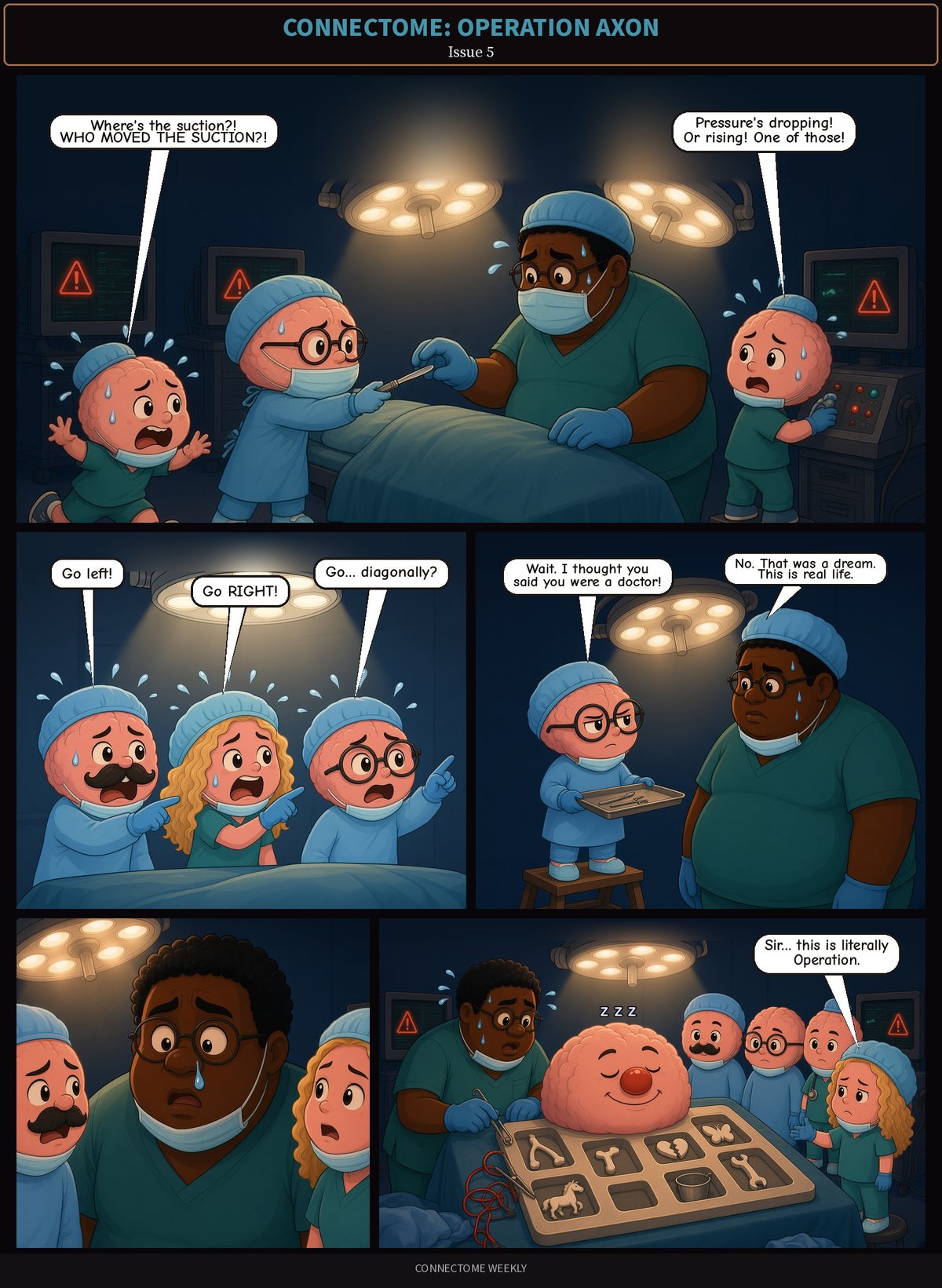
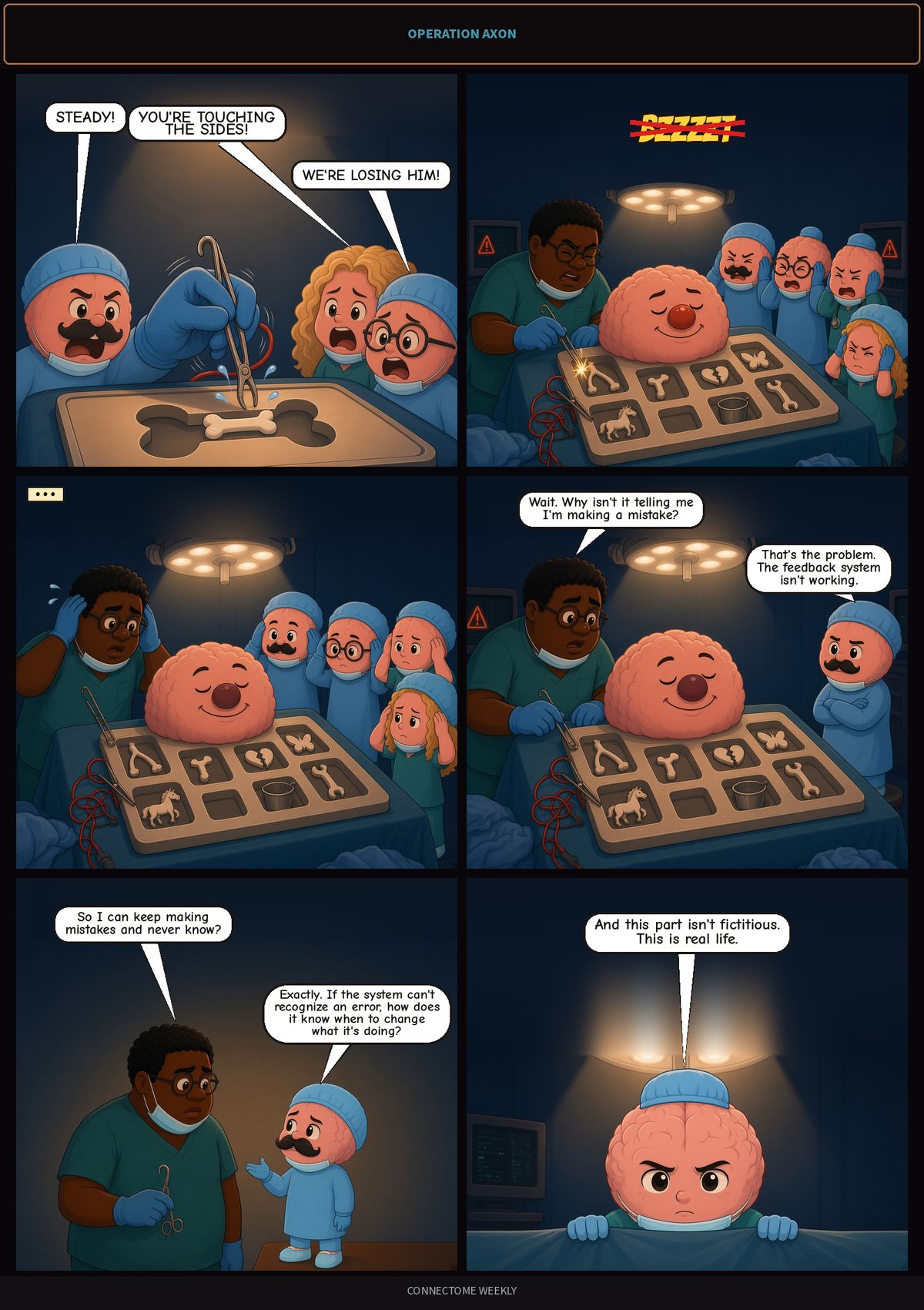
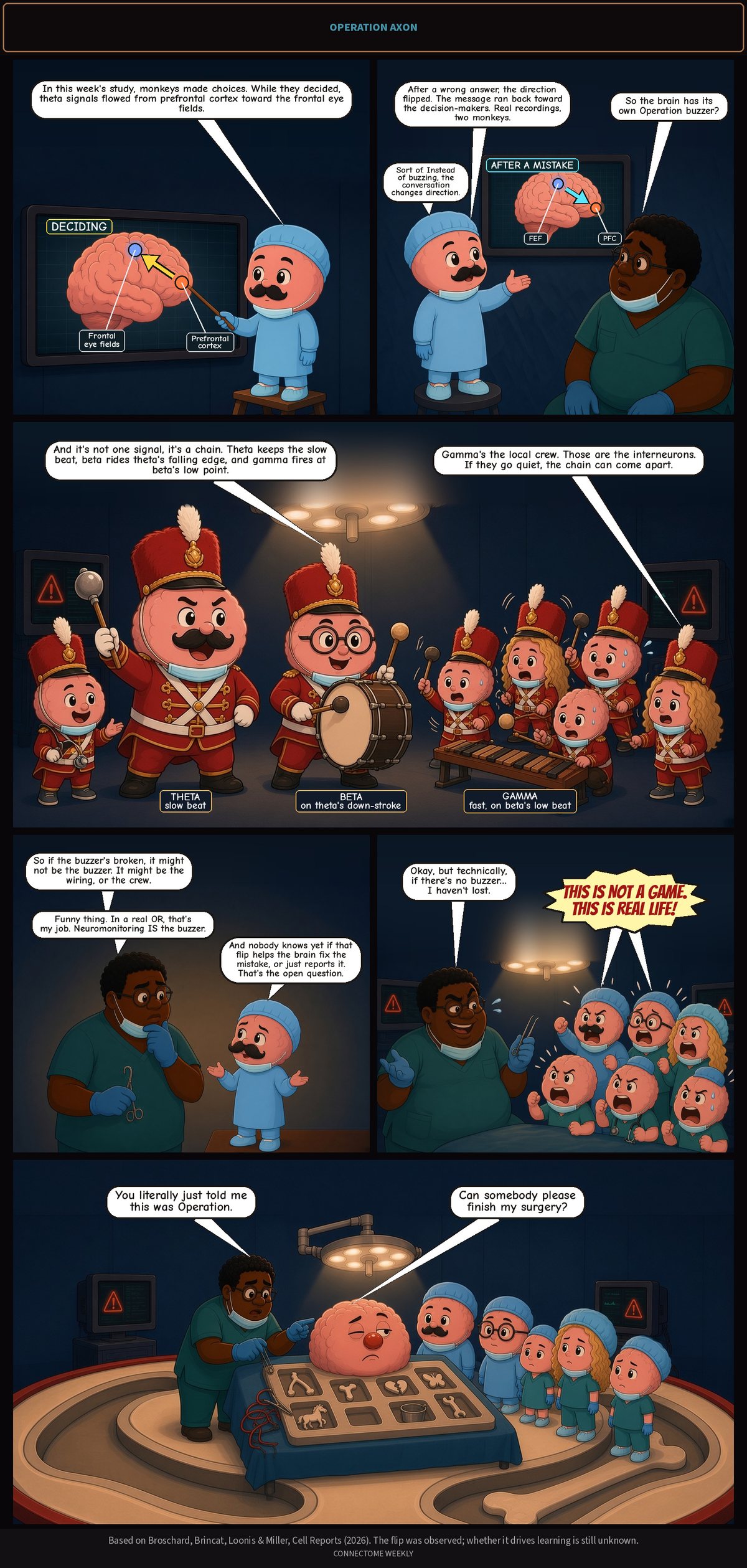
Inspired by this week’s lead paper.
1. Theta Data! Today's Findings Paired with YesterIssue's Support
Plain text is what the research shows. Italics are where my mind goes from it.
1. The paper, quickly
Scientists listened in on the front of the brain while monkeys played a sorting game. They found that the slow theta wave acts like the band’s drummer, setting the beat the faster waves follow. When a monkey got an answer right, that beat traveled one way across the front of the brain, and when it got one wrong, the beat turned around and traveled back.
This shows which way the beat traveled, not that it caused anything, and a wrong answer also meant no treat.
That turnaround is what grabbed me. What happens when the alarm goes off and nobody on the other end picks up?
2. My question
When you make a mistake, your brain sounds an alarm that says “that was wrong, try something else.” What if the alarm goes off, but the parts of the brain that choose your next move never hear it? Could we fix the timing or turn the volume back up, so the brain can correct itself again?
3. Where I’m pulling from
In Issue 1, fixing the brain’s timekeeper cells in mice with Alzheimer’s-like changes brought back the fast rhythm and helped the slow and fast beats line up.
That’s where I’d start looking.
Other attempts to bring back the fast rhythm have had mixed results.
Not a sure thing, which is why it’s worth testing.
In people, the error alarm is usually strongest in an “uh-oh” spot along the middle of the front of the brain. When researchers nudged that spot’s timing into step with the side of the front of the brain, people adjusted better after mistakes. Out of step, they did worse.
The monkeys were recorded at the receiving end. The turnaround fits with the alarm arriving there, but fitting isn’t proof.
In cocaine addiction, the alarm tends to be quieter. In OCD, it’s often louder, but the compulsions keep going.
A quiet alarm is one problem. A loud alarm that nobody acts on is another.
4. How I’d test it
People already in the hospital for epilepsy monitoring, with sensors placed in the brain, could play a choice game where “wrong” and “no reward” are kept separate.
If their brains show no turnaround after mistakes, I’m wrong about the link.
In mice, bring the fast rhythm back and see whether the drummer’s beat, and its turnaround after mistakes, comes back too.
If the fast rhythm returns but the beat doesn’t, fixing it isn’t enough.
In people, gently stimulate the error circuit and see whether they get better at adjusting after mistakes, carefully including people with addiction. That study hasn’t been done. Focused ultrasound, the sound-wave tool from Issue 2, could do it. That study didn’t measure brain rhythms, so it’s a tool here, not evidence.
If the alarm gets stronger but people don’t adjust any better, the alarm isn’t what’s missing.
5. Why it matters
One study found a quieter error alarm in people who scored higher on a food-addiction survey.
An alarm that doesn’t land could matter for addiction, aging and Alzheimer’s. Food and weight often get blamed on willpower. I don’t think that’s the whole story, but one study is one possible piece, not an explanation of obesity. I want to know whether this rhythm is part of the brain’s own checks and balances.
Research, to me, is about asking the next question. In Issue 1, scientists repaired the cells that keep the brain’s fast rhythm on the beat. In Issue 2, scientists aimed sound waves at a spot deep in the brain about the width of a pencil eraser. This week, scientists watched the brain’s beat turn around after a mistake. None of that is a treatment yet. Put together, it’s a sharper question and a way to test it. If you see a hole in the argument, or a better test, I want to hear it.
The question this leaves: After a mistake, can we tell whether the brain’s “that was wrong” alarm reached the parts that choose the next move, and if it didn’t, can we bring it back?
Read the paper · Earlier issues: Issue 1, Issue 2
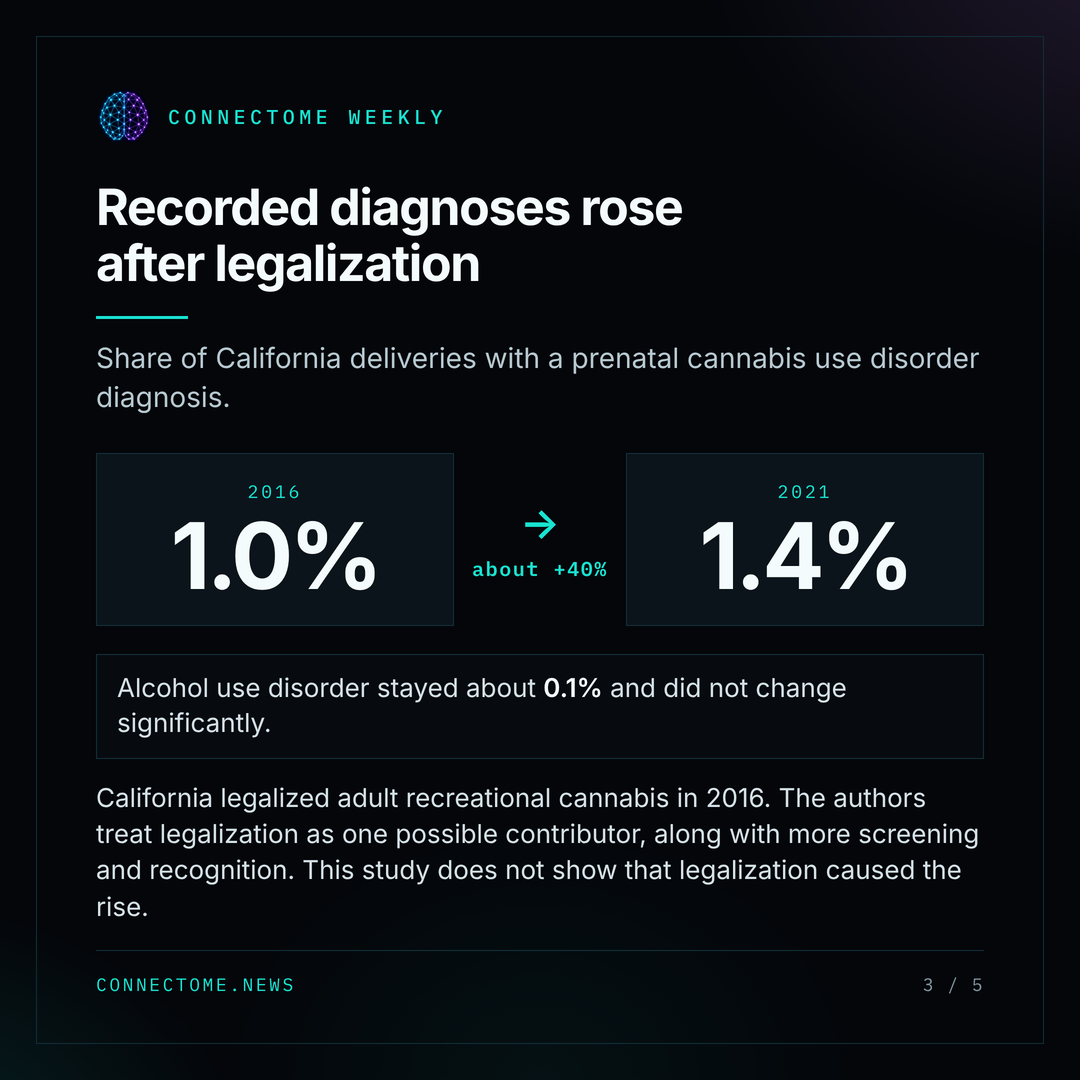
2. A diagnosis in pregnancy, and a psychiatric emergency after birth
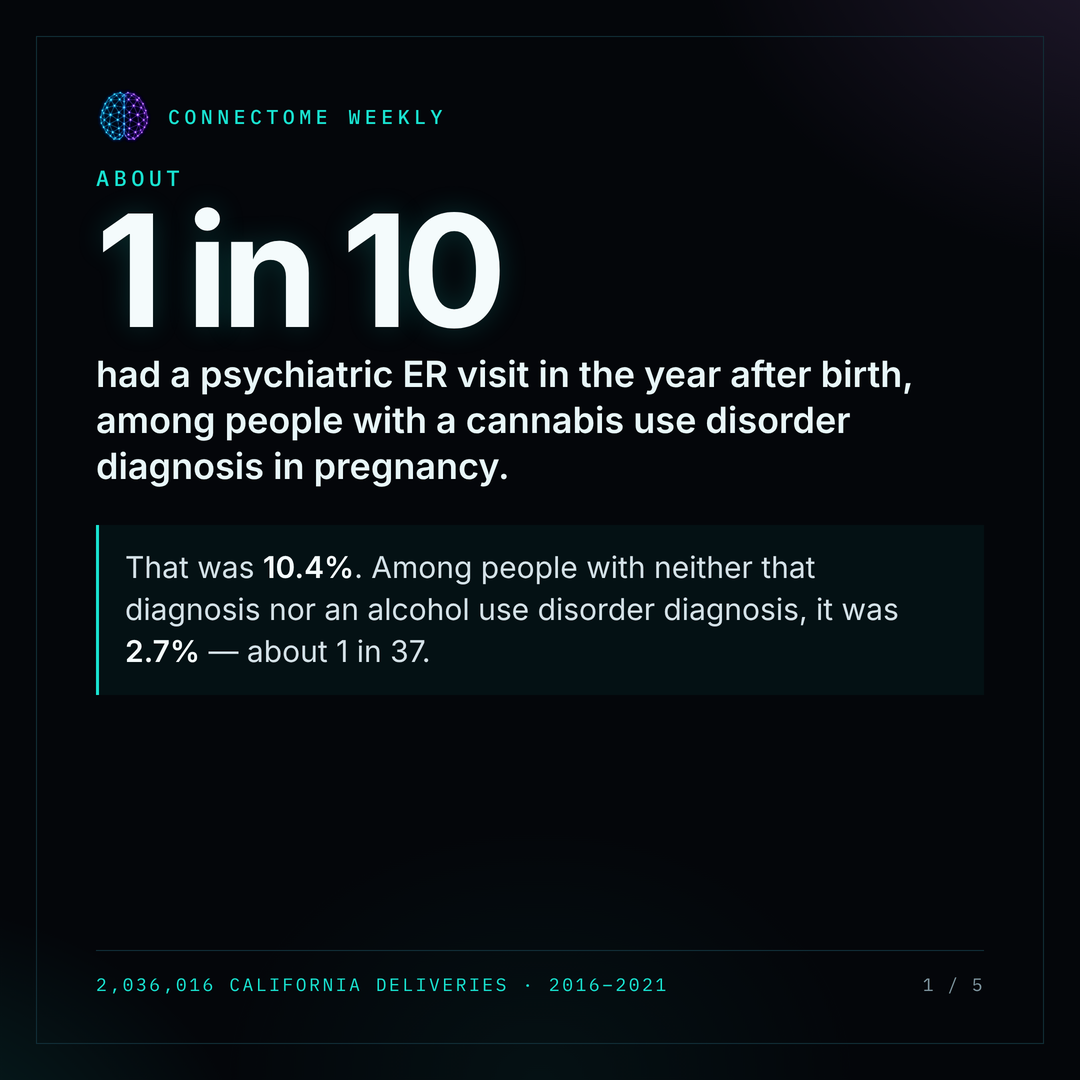
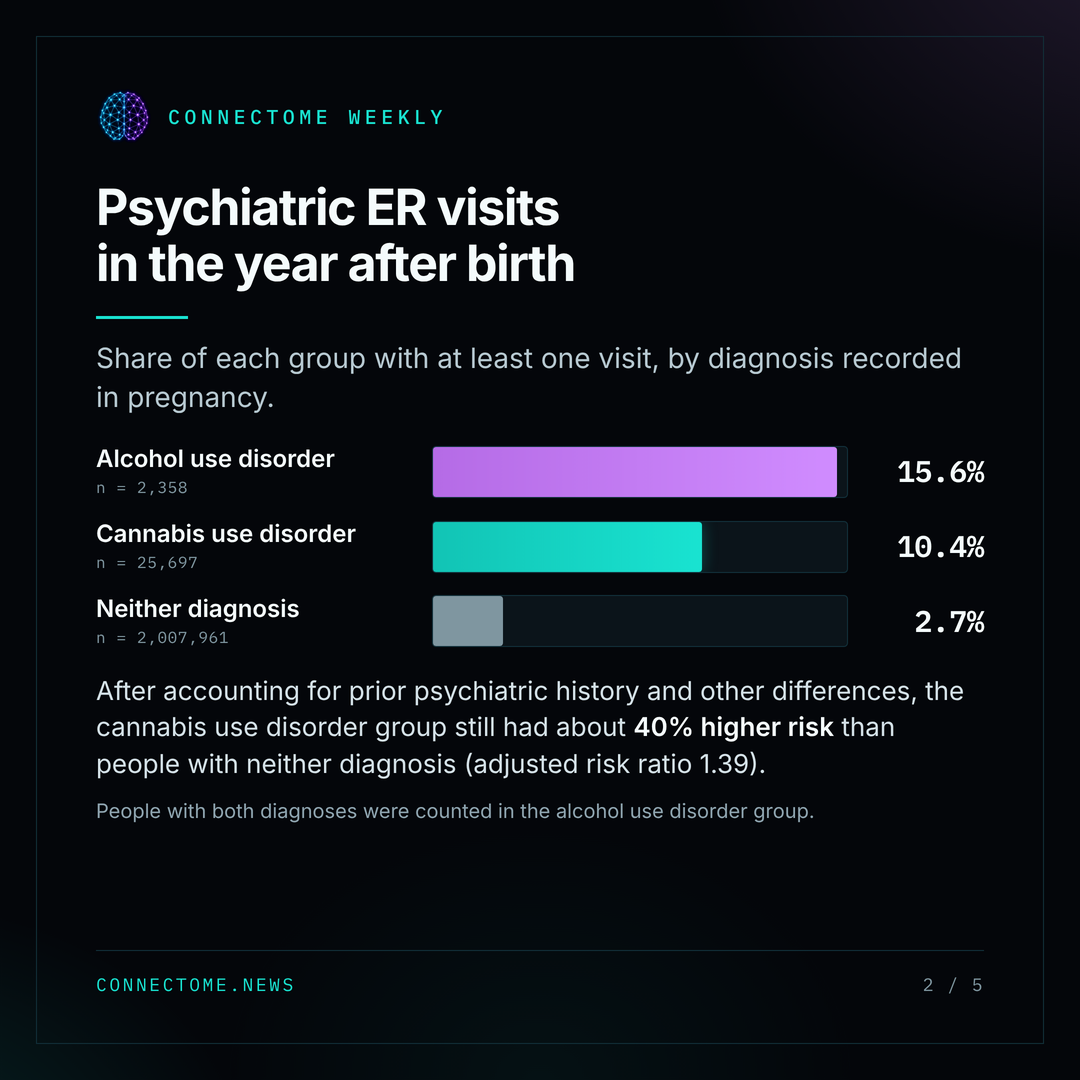
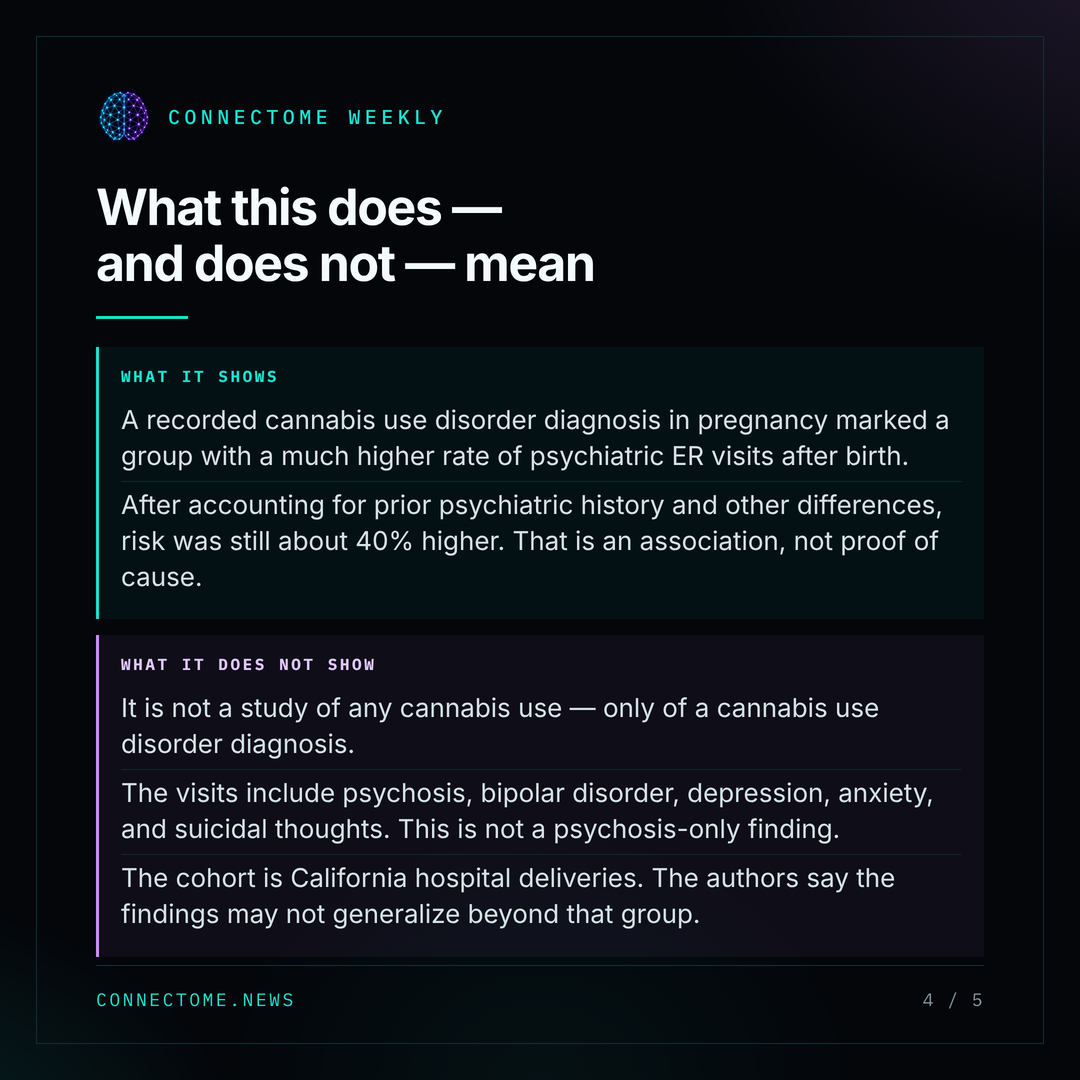
About 1 in 10 people diagnosed with cannabis use disorder during pregnancy had a psychiatric emergency-room visit within a year after giving birth, compared with about 1 in 37 people with no cannabis or alcohol use disorder diagnosis.
Need support after birth? Call or text the Postpartum Support International HelpLine at 1-800-944-4773 (information and support, not crisis care). In crisis, call or text 988.
The question this leaves: If a cannabis use disorder diagnosis during pregnancy already flags people at higher risk, what would change if mental health screening and care were a normal part of pregnancy care, not an afterthought?
Read the paper · Slides: Connectome Weekly
3. The Audacity: Fluoride
What follows is Brandon’s response to a new study of fluoridated water and the aging brain in Ireland. Read the paper
Safe for whom?
A 2026 dental research paper asks whether a lifetime of drinking fluoridated water harms the aging brain. It answers no, then ends with a line that isn’t science at all: the authors say their findings, together with fluoride’s proven benefits for teeth, support keeping fluoride in public water. That’s a policy endorsement stapled to a study that can’t carry it.
Safety in a vacuum. The authors themselves list ways fluoride could harm the brain, from inflammation to damage inside cells to scrambled chemical signals between brain cells. Then they test it in Ireland, a fairly uniform population with centralized water and no Flint-scale water disaster. They are effectively studying fluoride in a laboratory cleanroom, then declaring it safe for the real world. Studies from parts of China with naturally high fluoride that found harm to thinking get waved off because they only looked at people at one point in time. But high fluoride, crumbling pipes and several toxins at once is the real world for a lot of people.
The missing variable. They account for income, education, lifestyle, loneliness and access to care. But there’s no measure of pipe age, plumbing condition, or the metals old pipes leak, lead included. A paper about water and the brain leaves out the pipes the water travels through. It’s like studying lung cancer, accounting for diet and exercise, and never measuring smoking.
“Lifetime exposure” isn’t. They measured where people lived, not how much fluoride they actually took in. By their own numbers, tap water is only 12% of an Irish adult’s fluoride, and black tea is 76%. They checked how much tea people drank, but the headline still treats a home address as a dose.
Why it matters. Papers like this get quoted in policy fights. This one will be used to tell parents in neighborhoods with old, corroded pipes that their fears are unfounded, and to argue that money for new pipes can wait because “the science says the water is safe.” The people carrying the risk are poorer, older, Black and Brown communities with the oldest pipes. Their safety won’t get fixed without being politicized, and the authors already made it political in their last line. They just took the other side.
The question this leaves: Who has fluoride safety been proven for: the clean-water population in this study, or the communities still drinking through old, corroded pipes?
4. GLPs and the Brain TODAY
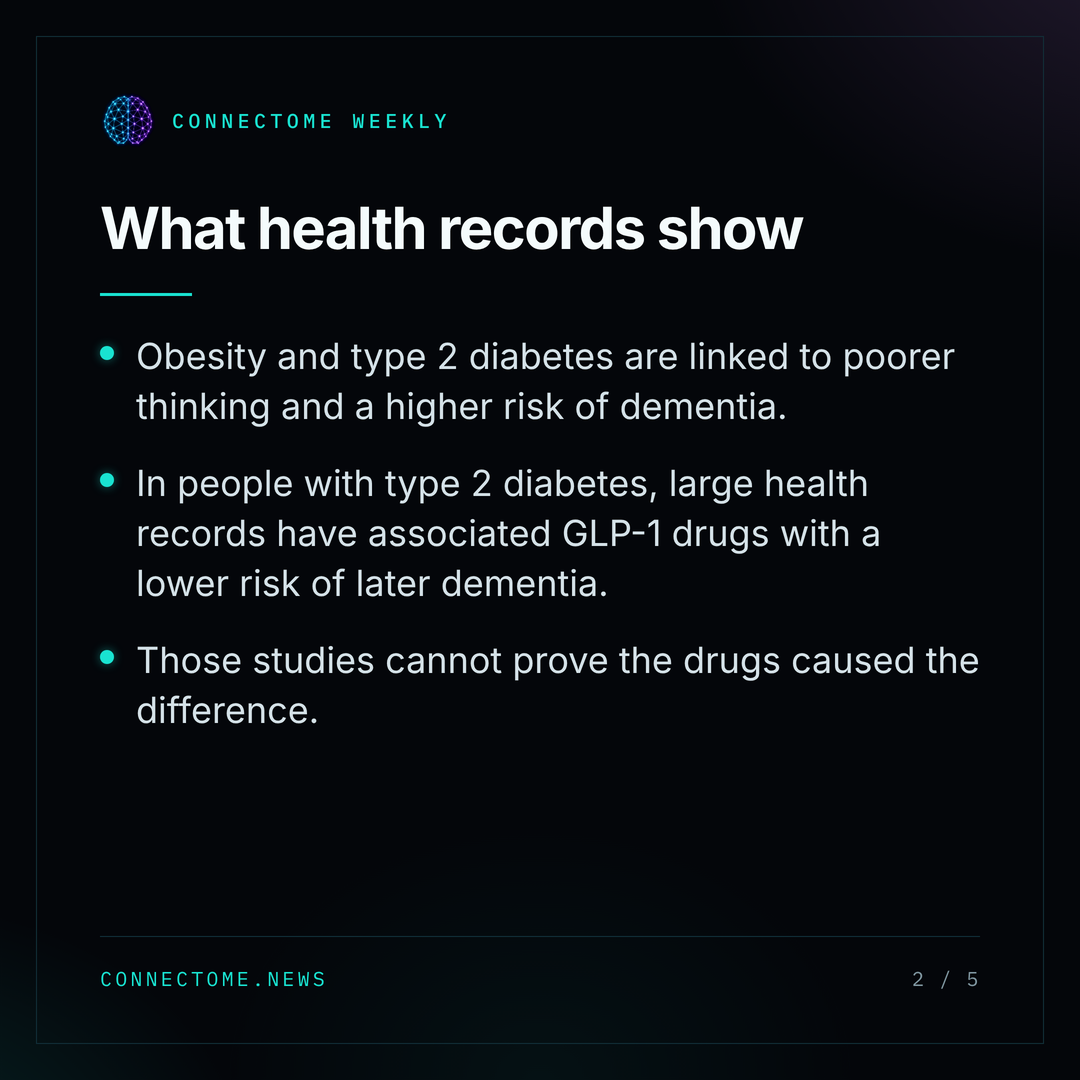
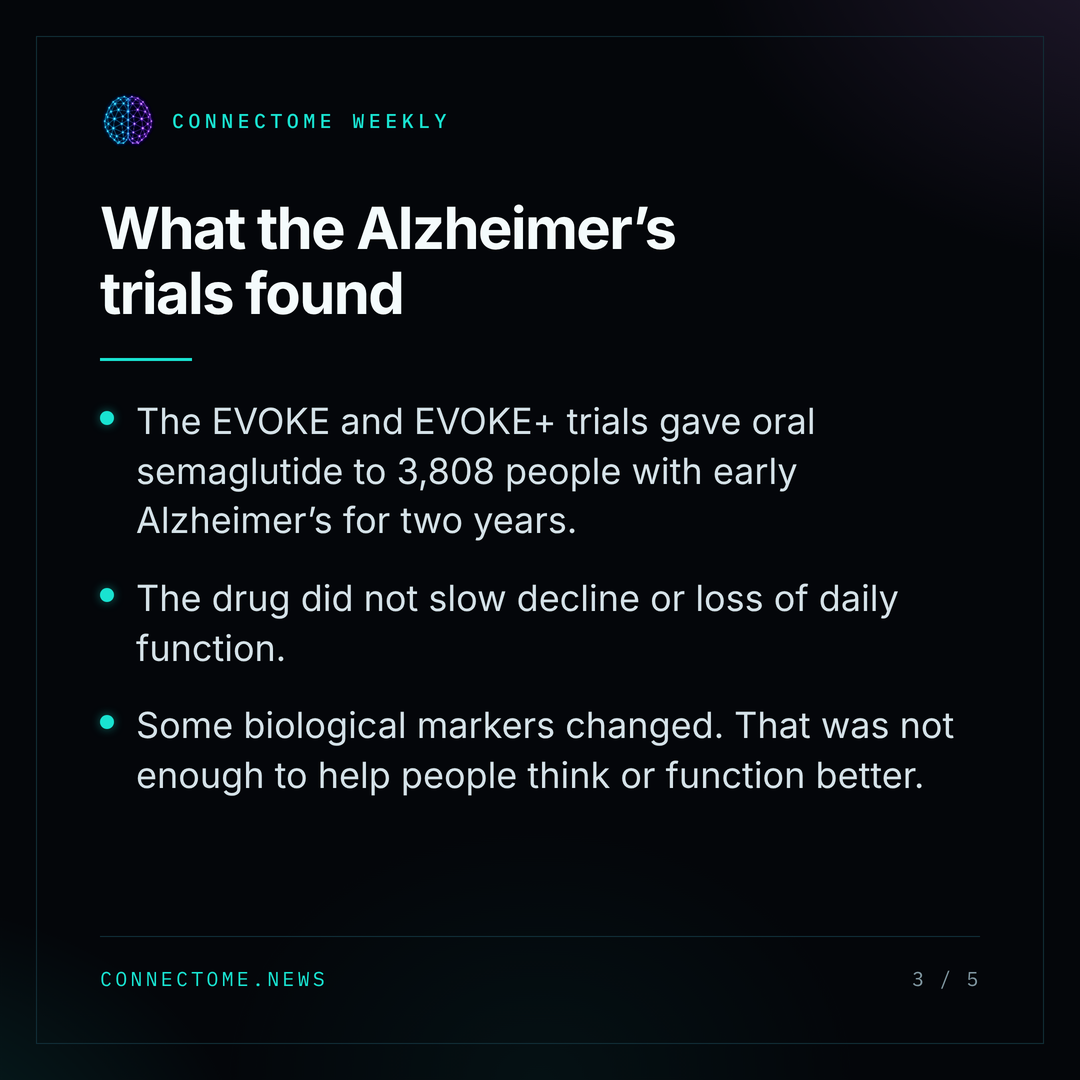
The authors’ bottom line: these drugs clearly change processes in the body tied to thinking and memory, but they have not been shown to reliably help thinking and memory in patients.
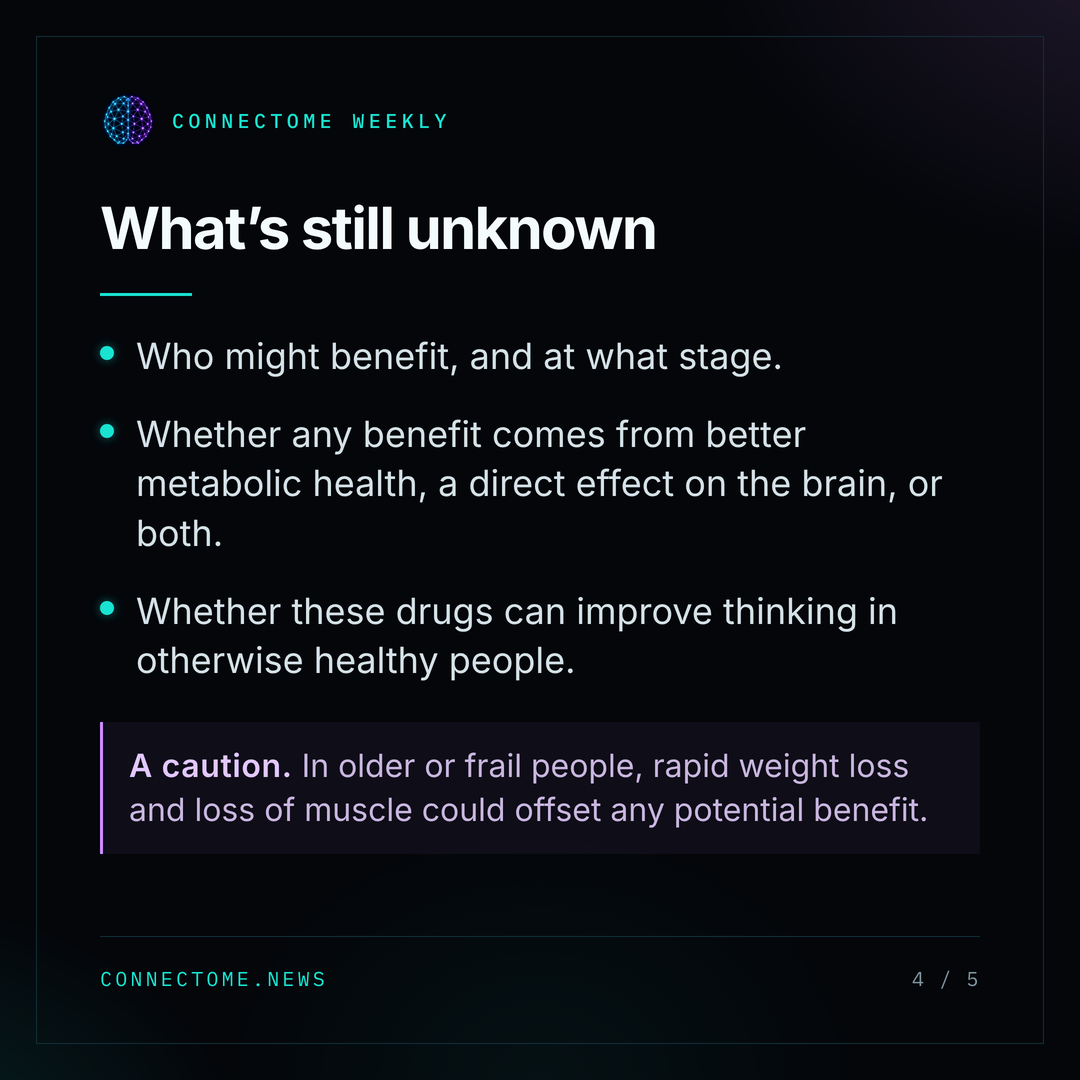
The question this leaves: If these medicines do help the brain, who might benefit, and when: before brain disease sets in, or after it already has a name?
Read the paper · Slides: Connectome Weekly
— Brandon Garrison