Connectome Weekly · Issue 3 · Starting Points
Oct 26 – Nov 1, 2026
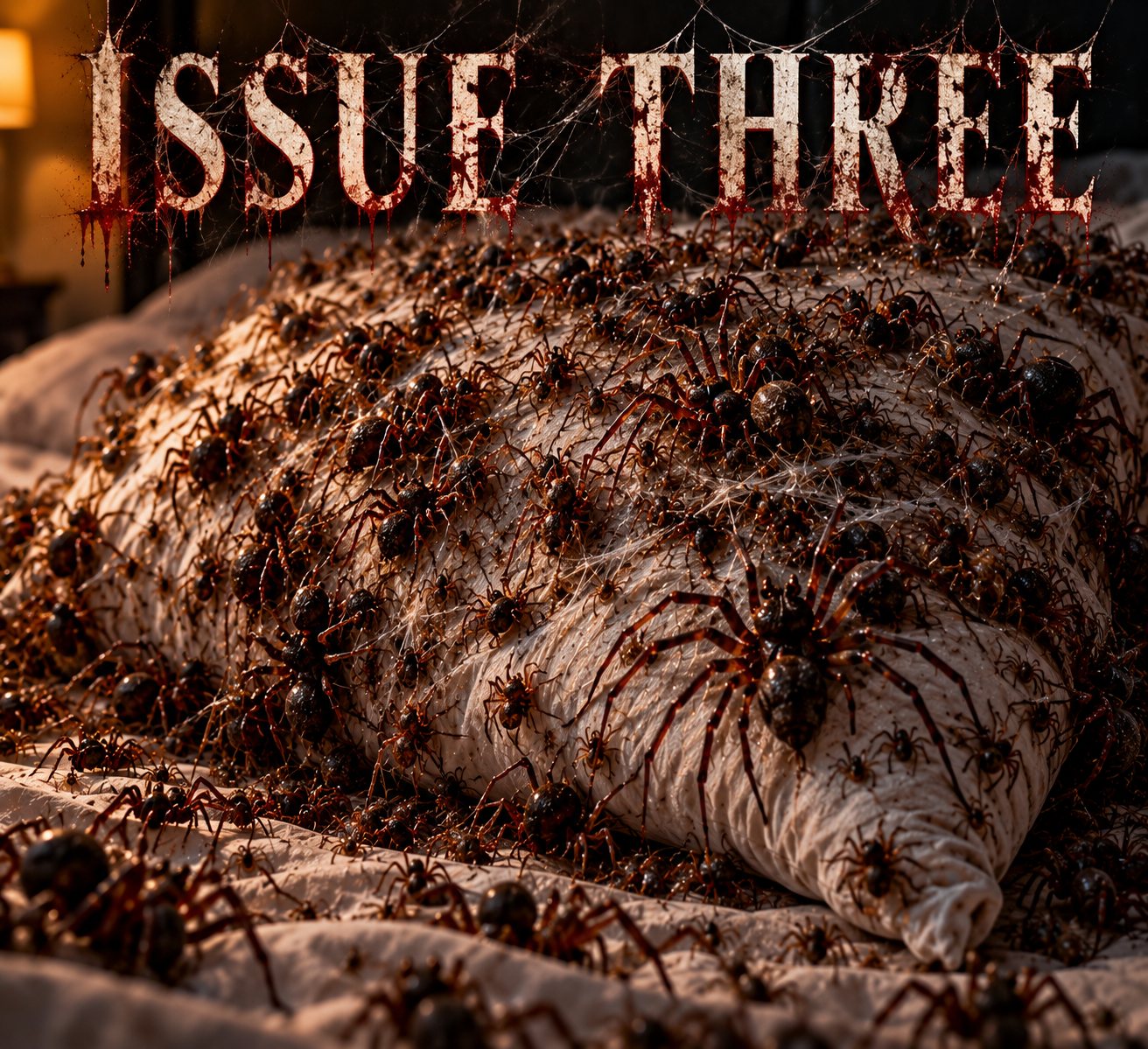
Fear is a powerful glue for memory. But as our second story shows, it isn't the only one.
This week is about starting points. The brain's starting point decides the outcome: one dose of psilocybin acted differently in stressed and healthy mouse brains, amygdala cells decide in a third of a second which ordinary moments you keep, and your daily steps may soften the baseline your genes set.
This week's episode: “From Psilly to Serious-cybin”
Brandon and Axon dive into the brain. The real science behind it is below.
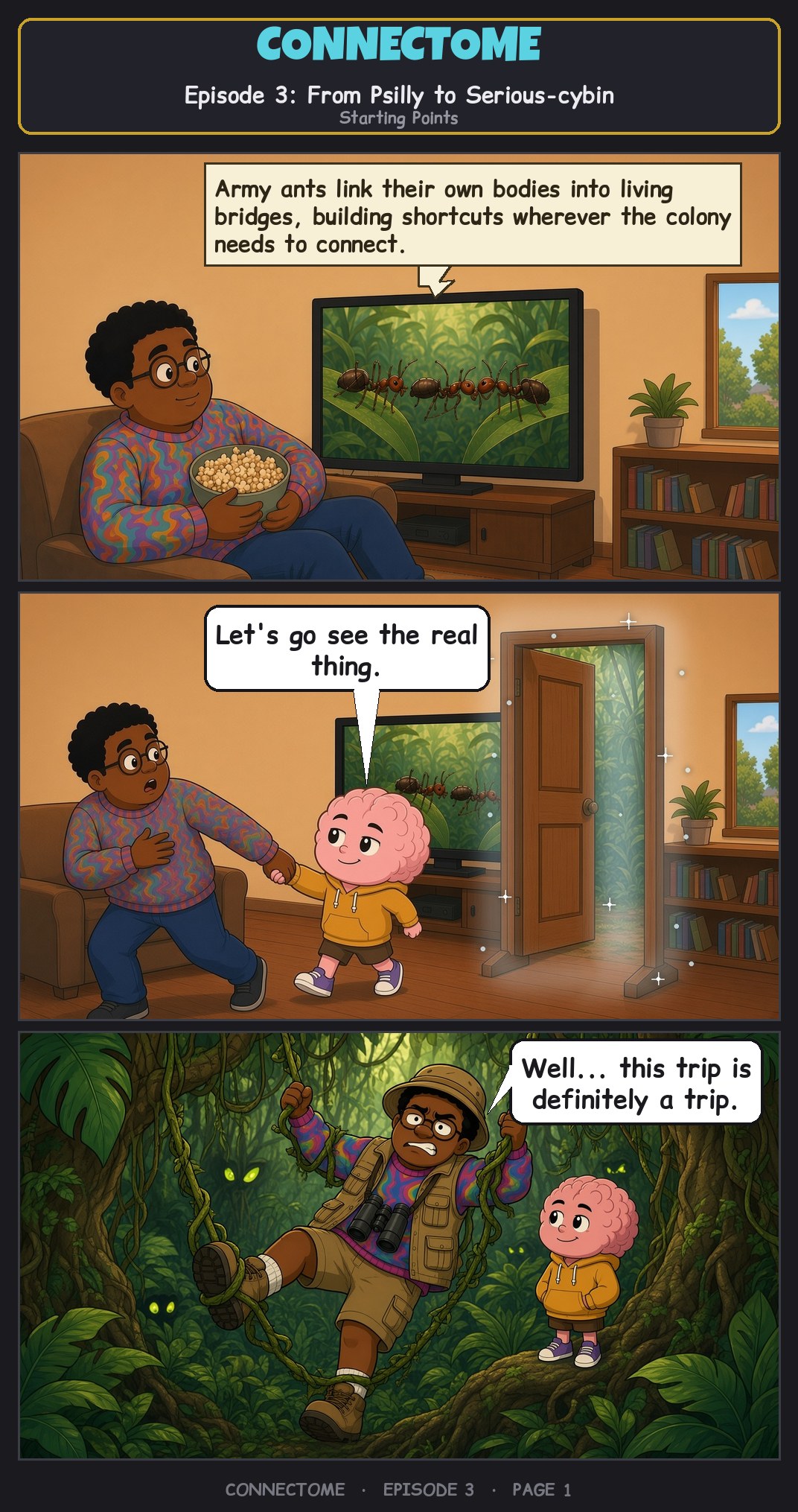
Page 1: an army-ant documentary on TV, then Axon pulls Brandon out the door and into the jungle.
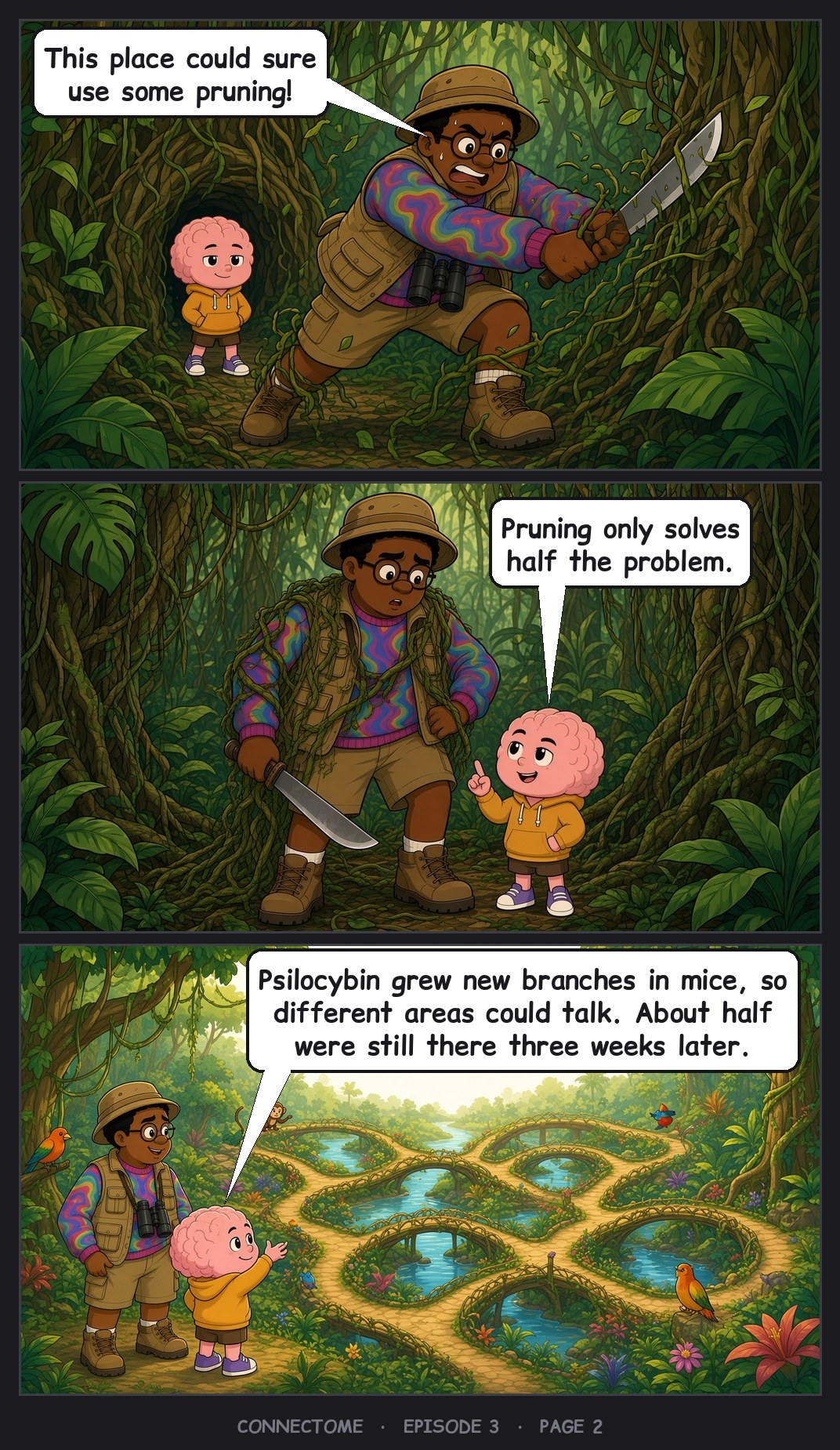
Page 2: the jungle is too thick to see through. Pruning only solves half the problem.
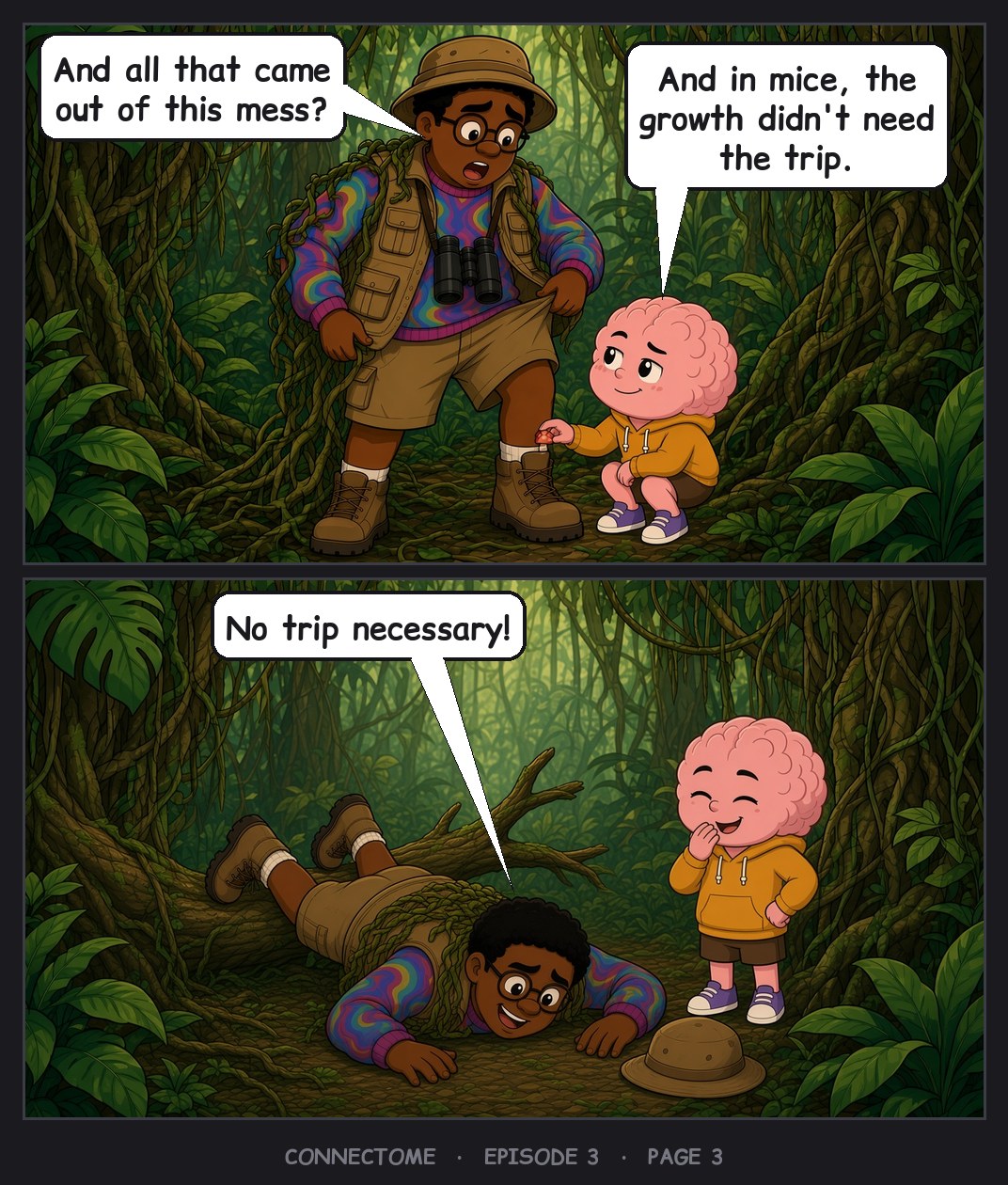
Page 3: new pathways link the clearings, in mice without the trip, and Brandon trips anyway.
Comic credits: Inspired by the lead study: Jacob J. Baker, Emily Kogan, Shaorong Ma, Ju Lu & Yi Zuo, Nature Neuroscience (2026).
The lead
Mushroom effects without the trip (in mice)
“5-HT2A receptor signaling in cortical layer 5 pyramidal neurons is necessary and sufficient for psilocybin-induced synaptic remodeling but dispensable for the head-twitch response, a rodent proxy of hallucination.” (Baker et al., Nature Neuroscience, 2026)
This premise/finding initially started with hope at all the good that can be done. The immediate and more responsible thought was: there's now quite a bit of homework to do. What other functions/behaviors operate through systems that either possess layer 5 pyramidal neurons, or have shown laboratory success but would be too hazardous at certain mushroom doses, or are too distracting (the trip) to responsibly continue the research with human trialing and acceptance?
It seems since the first Woodstock, but more didactically the past 20 years, mushrooms have been the quasi-therapy choice for severe PTSD sufferers/veterans, and CEOs and business bros looking to unlock or open their third eye of enlightenment, or the next creative, innovative brains report — attempting to push the next frontier. Deeply a part of the global zeitgeist.
When do we find some of the most success with synaptic growth, but also betterment of quality of life? In that same breath: methods of injecting or absorbing psilocybin, if trips avoid the direct concern.
“Psilocybin drives rapid growth and maturation of dendritic spines”: within 24 hours, and the new spines last for weeks, though the net gain fades within 1–3 weeks as older spines are pruned.
However, who's to say the Finbros were wrong? Psilocybin has been shown in mice to both prune older connections and assist with synaptic growth and communication. That leads to new discoveries, new perspectives, and, I think, literally new thoughts about what you're analyzing.
- I think mushrooms respond to the brain's baseline microenvironment. In stressed mice, they seem to protect existing synapses and connections from loss while still adding new ones.
- Layer 5: the primary computational output cells of the cerebral cortex.
My open question
I believe there was a June preprint (not yet peer-reviewed) that had fatty acid building up at their dendritic end, preventing cellular communication. I think a hypothesis can be established to help these cells communicate independent of the route that directly helps them. That could then allow for all cellular treatment to be at least stable.
The study, in brief (in mice)
- More new connections, fast. Within a day, new-spine formation rose from about 5% to about 8%.
- They matured and stuck around. About 28% of new spines came in as mature “mushroom” spines, versus about 2% without the drug. About half were still there at three weeks, versus under a third.
- Renovation, not addition. Older spines were pruned faster at the same time, so overall density drifted back toward baseline.
- After chronic stress. In mice put through three weeks of unpredictable mild stress, one dose roughly doubled new-spine growth and brought stress-driven spine loss back to normal, measured one day later.
- The split. With the serotonin 2A receptor only in layer 5 pyramidal neurons, spine growth came back (partly) with no head twitch. With it removed from just those cells, the twitch stayed and the growth was gone.
What it doesn't show. This is mice. A head twitch is a motor reflex, not a hallucination; the authors agreed it “should not be conflated with perceptual hallucinations.” The knockout work was done in healthy mice, the stress experiment was followed for one day, and groups were about five mice each. In people, every psilocybin trial so far has included the trip, and the first human synapse-imaging study found no significant increase a week after a dose.
Credits: Jacob J. Baker, Emily Kogan, Shaorong Ma, Ju Lu & Yi Zuo (UC Santa Cruz; Lehigh University), “5-HT2A receptors in layer 5 pyramidal neurons mediate the neuroplastic but not the hallucinogenic effects of psilocybin,” Nature Neuroscience (Oct 15, 2026). DOI: 10.1038/s41593-026-02490-y. Fatty-acid preprint: Katafygiotou E, … Park J, Chung J, “Activity-dependent lipid droplet biogenesis and turnover regulate synaptic integrity,” bioRxiv (Jun 29, 2026), preprint, not yet peer-reviewed. DOI: 10.64898/2026.06.25.734633. Earlier work: Shao et al., Neuron 2021, 10.1016/j.neuron.2021.06.008 · Shao et al., Nature 2025, 10.1038/s41586-025-08813-6 · Johansen et al., Translational Psychiatry 2026, 10.1038/s41398-026-04285-y. Via Neuroscience News.
Human Amygdala Neurons Decide What You Remember

Resting your head on a pillow made of spiders: the kind of moment fear makes unforgettable. The study shows the amygdala tags ordinary moments too.
One of the most rewarding, informative, and unique parts of my day is listening to the daily epilogue of a speech-language pathologist. Our back-and-forths usually comprise her walking through her approaches: the smiles and the torment. I'm most interested in the techniques needed to reach the speech and communication systems of autistic toddlers.
She's regularly shocked by my memory for names, but I ask her: doesn't that tie into how you remember and keep track of your kids? Her answer comes as if you could hear the bullets and helicopters of Vietnam. She utters, "the fear."
So why would a lesson plan or a play-based therapy session get stored by the same driving force as resting your head on a pillow made of spiders? This paper dives into that curiosity.
Patients already being monitored for epilepsy looked at everyday photos of people, food, animals, cars and places. One brain cell in the amygdala loved animals, and it fired even harder for the animal photos people would later remember. It made that call in about a third of a second, and it didn't matter whether the picture felt scary or calm.
Fear isn't the only gatekeeper; the amygdala flags the ordinary too.
Credits: Xiao J, Daume J, Salimpour Y, Kurilenko N, Mosher C, Anderson WS, Valiante TA, Mamelak AN, Rutishauser U. “Stimulus-specific recruitment of human amygdala neurons predicts episodic memory encoding success.” Nature Neuroscience (Oct 27, 2026), open access. DOI: 10.1038/s41593-026-02493-9. Cohorts: 42 and 95 patients, partly overlapping; Cedars-Sinai, Toronto Western, Johns Hopkins.
Your genes set the starting line. Your steps still count.

The Issue 3 flyer: daily steps, exercise and depression genetics. Tap it for the interactive version with the self-check.
Credits: He Q, Zhang J, Beevers CG, Brown DMY. “Associations and interactions between genetic vulnerability and physical activity with MDD in the All of Us Research Program.” Nature Mental Health (Oct 2, 2026). DOI: 10.1038/s44220-026-00738-x. If you're struggling, call or text 988 (U.S.).
Axon's Findings
Axon is just a guy with a brain who asks the follow-up questions.
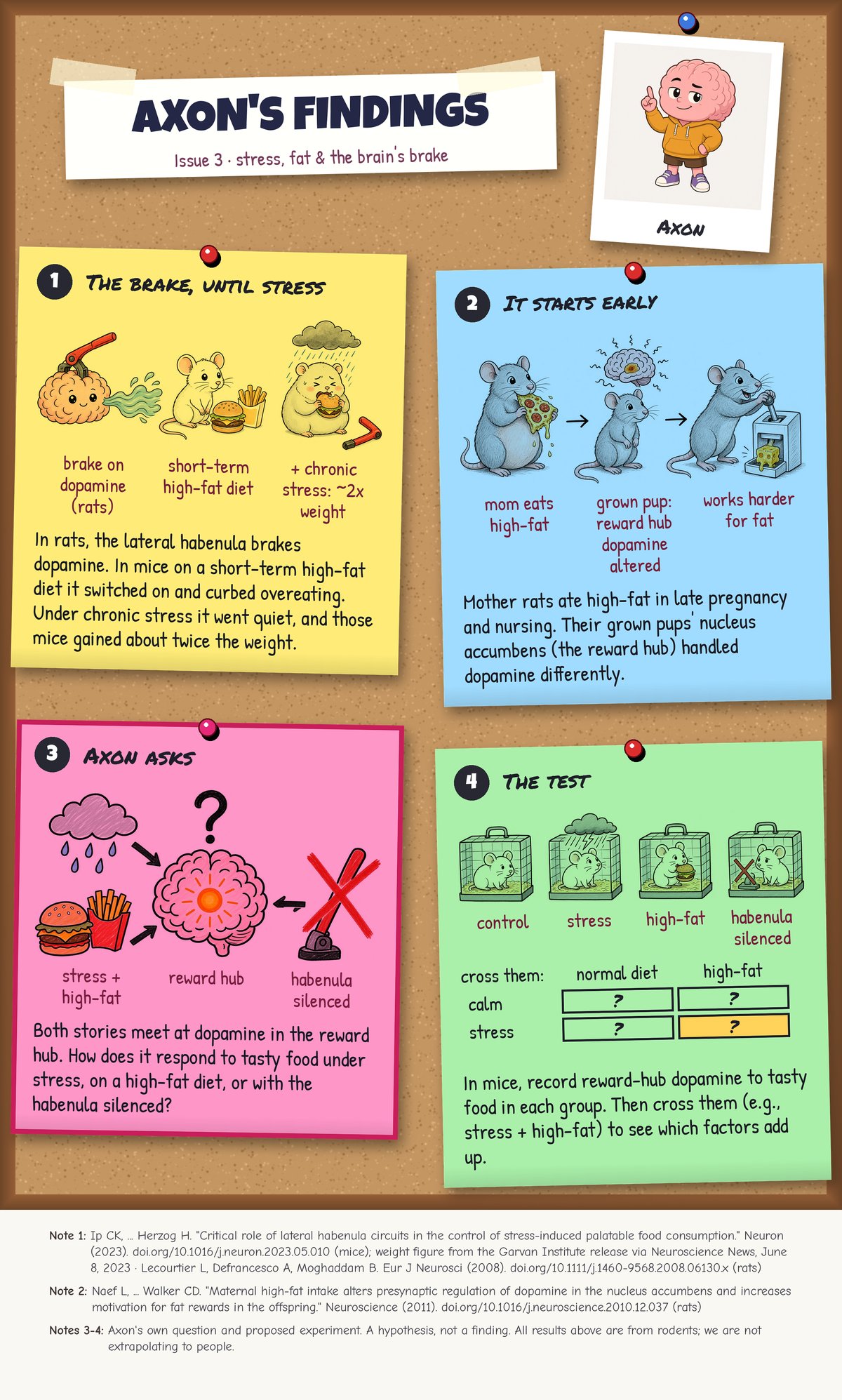
Axon's Findings, Issue 3: four post-its on stress, a high-fat diet and the brain's brake. Notes 1–2 are published findings in rodents; notes 3–4 are Axon's own question and proposed test, not findings.
Does lateral habenula inhibition by chronic stress interact with high-fat diet to further sensitize nucleus accumbens dopamine responses to palatable cues?
Credits: Ip CK, … Herzog H. “Critical role of lateral habenula circuits in the control of stress-induced palatable food consumption.” Neuron (2023), mice. DOI: 10.1016/j.neuron.2023.05.010; weight figure from the Garvan Institute release via Neuroscience News (June 8, 2023) · Lecourtier L, Defrancesco A, Moghaddam B. Eur J Neurosci (2008), rats. DOI: 10.1111/j.1460-9568.2008.06130.x · Naef L, … Walker CD. Neuroscience (2011), rats. DOI: 10.1016/j.neuroscience.2010.12.037. Notes 3–4 are Axon's own question and proposed experiment: a hypothesis, not a finding. All results are from rodents.
— Brandon Garrison
Read more and explore the map at connectome.news · connectome.news/connectome
Connectome Weekly · Stories via Neuroscience News. Summaries reflect article reporting; always check the original studies.